
Can I Apply Again If My Visa Gets Rejected? Everything You Need to Know
If you?ve been waiting for several weeks and finally got a visa rejection letter, it can be so discouraging especially if you?ve already gotten a tick...
14-04-2026
Read More
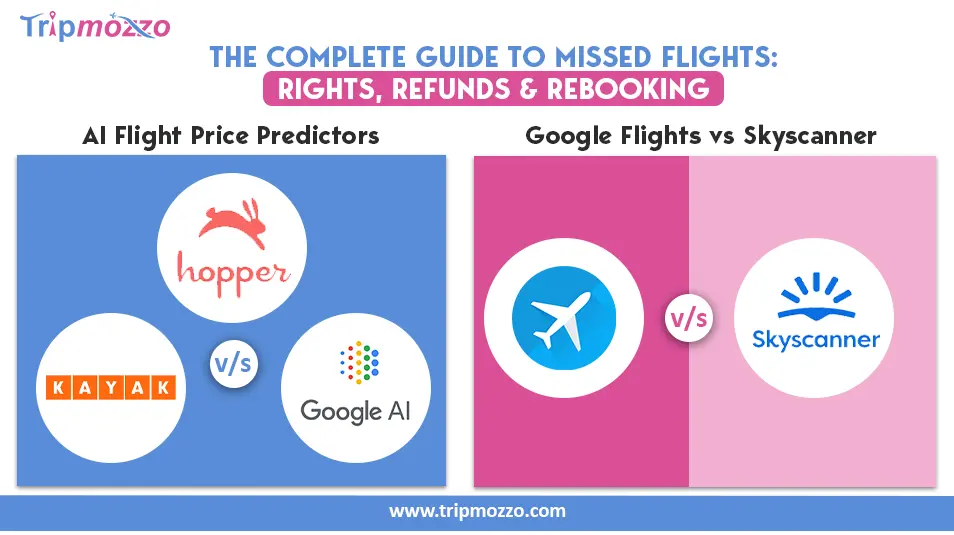
Table Of Content
Every seasoned traveller would be familiar with this experience; you make a reservation and the very next day someone you know reserves the same seat but at half the cost. In 2026, this no longer has to be your reality as travel technology has advanced rapidly. Contemporary platforms can not only compare fares but also analyze trends, forecast price decreases, and search hundreds of airlines in the shortest time.
The increasing demand all over the world and the dynamic nature of the prices of airlines that fluctuate more than once a day made it harder than ever to get the right deal. This renders comparison tools not only important but also indispensable to every kind of traveler nowadays. This guide will discuss the best flight comparison tools 2026 provides to help you save and travel smarter.
The 2026 pricing of airlines is no longer a mere supply-demand equation. Carriers apply advanced machine learning algorithms that take into account your browsing history, time of the year, type of device, and even patterns of local demand to charge you a personalized, and often inflated, price. Booking directly via an airline site might be safe, however, it can hardly provide you with the whole picture. This is precisely what flight comparison sites can excel at, as they can bring together data of dozens of sources, remove the noise, and reveal to you where the real value is.
To add to it, low-cost airlines have emerged in Asia, Africa and Latin America, which has created a variety of choices of flight options like never before, but they are fragmented throughout regional booking systems that would never be found by a global traveler otherwise. The right comparison tool is that which puts all these options in a single roof.
It is always good to know the strategy of using these tools before going into the particular platform. Having the knowledge of how to find cheap flights with fare tools is half the battle. The following are the fundamentals that experienced deal-hunters abide by:
Speaking of the two most popular platforms of the planet, they inevitably make travelers ask themselves the following question: which one is better in Google Flights vs Skyscanner 2026?
Google Flights is the benchmark of the clean UX and potent filtering. It has the best price calendar in terms of visual clarity, with the user seeing at a glance the cheapest days of the month. The Explore map option is a traveler dream come true because as a traveler, you just type in your home city of departure, leave the destination field open and Google gives you a world map that is color-coded based on price.
Google has been working on its AI integration twice in 2026, displaying fare trend information in search results. It has now informed you that it is either lower or higher than normal fare or is normal fare according to history so you can be certain to book now or wait. Nevertheless, there is a significant flaw in Google Flights, as it does not always cover low-cost carriers and low-cost airlines, especially regional ones.
Skyscanner perfectly fills this gap. It has a more extensive and expanded database that attracts low cost carriers fares, charter carriers, and consolidators that Google frequently overlooks. The so-called Everywhere search (type "Everywhere" as your destination) is a legend among low-end traveler groups due to the ability to find out offers to places they never thought of before.
The 2026 update of Skyscanner also added a redesigned mobile app, with more price notifications and enhanced regional airline coverage, which is particularly strong in Asia, the Middle East, and Eastern Europe.
The verdict: Google Flights to be used in terms of clarity, trust, and AI-based insights. Go to Skyscanner to get the breadth, low-cost airlines, and to find out where to go that you hadn't thought of. The most intelligent travellers use both.
Tools show you the price, but what about the service? Understanding Delta fare classes can help you decide if the cheapest option is actually the best value.
The most intriguing aspect of travel technology in the past two years was, perhaps, the advent of AI flight price predictors. These tools extend way beyond mere price comparison - they are machine learning models that have been trained on billions of historical fare data points and are now capable of predicting whether a price will increase or decrease in the next few days or weeks.
Hopper is the unquestioned leader in AI prediction of fares. Its algorithm examines trillions of data and states that it is over 95 percent accurate in determining whether you should buy or wait. In 2026, Hopper has grown its Price Freeze option, that enables customers to reserve a ticket at a minor fee even as they settle on their travel plans - a truly handy gadget to the undecided traveler.
The basic buy or wait recommendation has been part of Kayak search results since the early days, but with its 2026 AI upgrade, it is much more granular. It has now displayed a percentage confidence score of each prediction and disaggregated the factors influencing the forecast, including the seasonal demand and the remaining seat availability.
Google flights is now powered by Gemini insights to be proactive and display fare anomalies as well as uncharacteristic price reductions on previously searched routes. It's less of a standalone AI tool and more of an ambient assistant, but its recommendations are impressively accurate.
These technologies are transforming the game. Travelers can make informed choices based on data and be confident that they are making the right decision at the right time in 2026, rather than basing their booking decision on the gut or arbitrary timing.
Google Flights and Skyscanner may be the most widely mentioned, but the range of best flight aggregator sites is much more extensive than most travelers are aware of. The following are some of the platforms that are getting strong accolades by 2026:
One thing is knowing what tool to use, another is knowing how to get the most out of it. The below mentioned cheap flight search engine hacks are proven techniques that the travelers who are experinced use in 2026
The Multi-city fare comparison is one of the most effective and least-known features on current platforms, and it is offered to travelers with complex itineraries, i.e. traveling to a variety of countries, doing a grand tour, or a business and leisure traveler.
Instead of searching three different flights in each direction and paying the round-trip premium three times, a multi-city search will build a single ticket to travel to multiple destinations consecutively. The savings in terms of cost can be immense.
Major aggregators (Google Flights, Kayak, Skyscanner) have a Multi-city tab in their search interface. You can put in the legs individually, stating departure and arrival cities and dates. The system will then compile an aggregate itinerary and the price can be much less than the total of individual round-trips.
The Nomad feature of Kiwi.Com goes a step further in that the algorithm can recommend the best order of visits based on price instead of you having to select the order.
Multi-city booking is especially useful in situations where your trip involves more than two destinations, where one leg of your trip would be expensive to book in a direct search, or where you wish to include open-jaw flights (flying into one city and out of another). Even better value can be given to long-haul travelers making a "round-the-world" style itinerary by special RTW (Round the World) fare tools provided by airline alliances such as Star Alliance and oneworld.
No matter what platform you use, there are some general guidelines that will always work in your favor:
While tools find cheap fares, always prepare for disruptions. See our Emirates flight disruptions guide for handling unexpected cancellations.
The key to getting the best flight deals in 2026 lies in the right tools and clever tricks. The AI-enabled flight comparison platforms allow travelers to save money and time, as well as make informed decisions, based on real-time data. With a combination of tools, flexibility, and established search methods, anyone will unlock improved fares. In the end, more intelligent planning will result in larger savings and more pleasant and enjoyable travel experience.
All Categories
Looking for detailed information on airline policies, terms & conditions, and more?
Call now to get complete guidance.
+1-888-933-0080Recent Articles