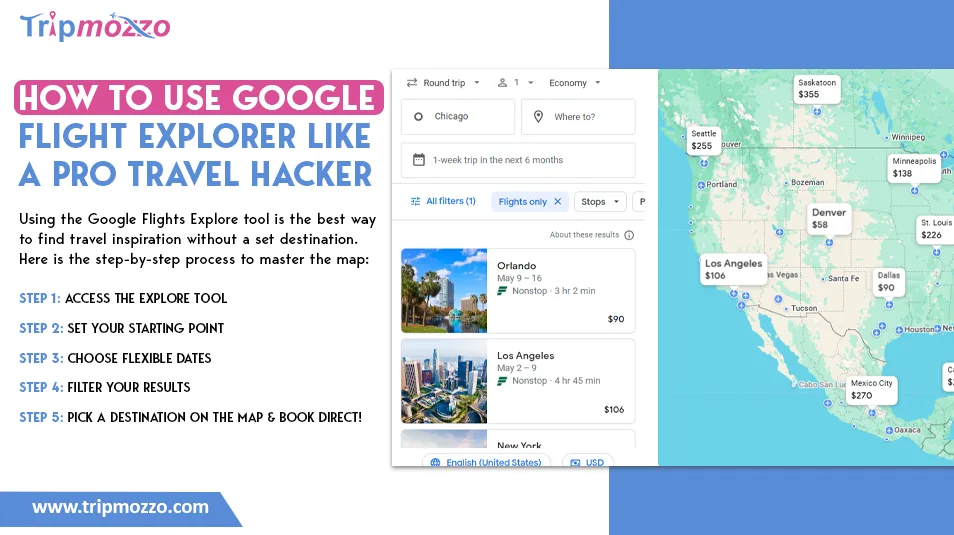
How to Use Google Flight Explorer Like a Pro Travel Hacker
Traveling to a destination can be exciting, but planning is often frustrating. Looking for affordable deals, best destination options, and finding the...
25-03-2026
Read More

Table Of Content
In the majority of cases, you cannot transfer your ticket to another individual. Airlines print tickets under the name of a particular passenger, and the identification of the name should be the same at check-in and boarding. If you wonder can you transfer plane tickets, and if not, why? The main reasons of existence of this policy are security, fraud prevention, and price control. Full ticket transfers are not usually permitted, but there are specific airlines that could allow minor corrections of names or in exceptional cases full name change with a fee. In case you are not able to travel, your best alternatives are to cancel the ticket, redeem travel credits, and rebook under the name of another person. To know how flexible you are, always look at the policy of your airline.
The travel plans are subject to changes and the passengers would consider whether they could transfer their ticket to another individual so that they can save on their ticket price. The ticket transfer of the airline will be summarized here briefly:
Minor typos can be fixed easily. Follow our comprehensive name change guide for instructions on specific airlines like United or Delta.
The plane tickets are usually non transferable, that is, you can not switch off a passenger to another after booking in the year 2026. But why not can you transfer airline tickets? This is an essential rule implemented by airlines because of the severe security measures, identity checks, and price regulations. Only slight corrections of names are permitted, though complete ownership transfer is very uncommon and might be restricted or charged highly.
The identity that a passenger has is bound to airline tickets for security reasons and operational reasons. Transfers might be caused and would result in fraud, misuse and disruption of airline pricing systems thus making it hard to keep accurate passenger data.
Explanation
Airlines demand that a ticket name be the same as the name of the traveler issued by the government. This also ensures safe and certified traveling, particularly in foreign flights with immigration tests. In case the tickets could be transferred, this may enable people of ill intention to use the ticket of another person thus compromising their security.
Fraud prevention is another significant reason. Non transferable tickets lower the risk of stolen tickets and credit cards abuse. When each ticket is associated with a particular person, airlines have a better chance of monitoring the passengers and cross-checking them.
Also, airlines employ the techniques of dynamic pricing. With transfers, individuals would be able to resell lower-priced tickets at a higher price, and this will disrupt the control of fares, causing unfair practices in the market.
Tough airline policies guarantee safety and proper tracking of passengers and fair prices. The rules assist the airlines in adhering to the international aviation standards and ensuring smooth running of the services and reduce the risks related to the change of identity and the usage of the tickets without authorization.
Explanation
Apart from international border control, the security in air buildings includes several levels of security in screening at airports. The government depends on the precision of the information on the passengers, and the airlines should uphold stringent regulations on the ownership of tickets.
Another factor is operational efficiency. The frequent changes of tickets transfers would make the booking systems and customer care and passenger database rather complicated. Non-transferability of the tickets makes the airlines simplify the processes and minimize the errors.
Lastly, there are strict policies that favour fair pricing. The airlines have high investments in demand-based pricing. Stopping ticket transfers will bring about a balance within the market and will also make sure that tickets are utilized by the actual traveler.
Airlines often receive questions such as can you book a flight for someone else? Even in 2026, airlines are unlikely to permit passengers to reallocate their flight tickets to another, even to a person. At the check-in stage, passengers are supposed to be the same. In different situations, the travelers can, however, undergo a change of names on the existing ticket but it is subject to some restrictions. These limitations are the following:
Passengers often ask how to transfer tickets. Majority of airlines do not permit their passengers to transfer their flight tickets, which were booked to another person. But in case a passenger has entered the wrong name in the time of booking the ticket, he/she can normally update the ticket details before checking in. In the case of minor name changes, the airline can assign no fee and documentation can be forgone. It is notable that the minor changes are usually permitted free of charge only one time. In case a passenger would require making a major change of name, he/she will be asked to give documentation and pay a fee.
The change of name on a flight ticket is subject to the policies of the airlines. Some airlines allow passengers to correct or change completely at a fee, whereas some can only change small spelling mistakes. The following are the procedures to make changes to the name on the flight ticket:
Amendments of name corrections can be made in the event of spelling mistakes in the same ticket; however, transfer of ownership is not possible since tickets are non-transferable. Each airline has different policies, such as surcharge fees and time limits.
|
Aspect |
Name Correction |
Ownership Transfer |
|
Purpose |
Fix typos/misspellings |
Change passenger entirely |
|
Allowed |
Usually yes (fees apply) |
Rarely; mostly no |
|
Fees |
$50-$200 |
N/A or cancellation fees |
|
Airlines |
Most (e.g., Delta, United) |
Few (e.g., Low-cost carriers ka mention achha hai, Frontier ke saath Ryanair (EU) ka bhi mention karein kyunki wo name change allow karte hain (fees apply)) |
|
Timing |
Pre-flight, often 24h cutoff |
Not standard |
This table will help to understand what to do: select correction when something is minor; cancel/rebook when something is true.
In case there is no transfer of a flight ticket, there are still some practical ways out of losing your money. Airlines usually offer flexible options such as cancellations, credits or rescheduling. Knowledge of such options can assist you in modifying your travel arrangements effectively and incurring less loss of money and also utilize your reservation in a more effective manner. If you cannot transfer flight tickets, the available options are:
If you can't transfer the ticket, check your airline's specific cancellation and refund policy to see if you can at least get travel credit.
A majority of the large airlines in the U.S. have a very rigid policy towards flight ticket transfers, and as a rule, ticket transfers are not made. The tickets provided by airlines such as American Airlines, Delta Air Lines, and United Airlines are non-transferable i.e. the passenger name cannot be substituted with that of a totally different person after the purchase of the ticket.
These airlines, however, permit slight corrections of names e.g., correction of spelling errors or formatting problems. Transfers of ownership of the ticket by full name are usually not allowed. Rather, they have flexible deals such as flight changes, cancellations, or travel credit, which passengers could utilize in future bookings.
Southwest Airlines is characterized by policies that attract customers. Although it still does not provide the possibility to transfer the ticket entirely, it provides no change fees and convenient rebooking possibilities. This is flexible, and travelers can alter plans without losing the value of their ticket.
In the U.S., low-cost carriers can change the full name on a fee, but it normally comes with a condition like time restrictions and extra fees.
Altogether, the leading airlines in the U.S. focus on the security, identity checking, and price management, which is why transfers of tickets are limited. Rather than transferring tickets, passengers would be advised to do change or cancellation options that the airline offers.
For airlines currently facing operational issues, like the Saudia 2026 flight disruptions, name change rules might be temporarily relaxed.
Finally, airline ticketing transfer is usually unacceptable because of the security and fraud prevention issues, as well as the price regulation. Although Micros may permit minor corrections on name, complete changes of names are normally limited and are usually charged. The passengers with the change of their travel plans will have the ability to cancel and rebook their tickets under a different name. The point is that it is necessary to know the exact airline policies on such issues to comply with them and not get into serious trouble. This is so that when making arrangements to travel always ensure that you confirm name change, cancellation and rebooking.
Frequently Asked Questions
What do you do when your family member or friend requires your plane ticket?
Airline does not allow passengers to transfer tickets and thus the passengers will be obliged to cancel the current booking and re-book with a new name.
When can I transfer my ticket?
The passenger should not transfer the flight ticket under any circumstances although they could change the name on the ticket. Request of change of name should be done prior to the check-in.
Are you required to have documents to transfer a ticket?
Flight ticket transfer is not allowed but one can change the name of the passenger. Airlines usually do not presume any documentation to minor changes of names. Nevertheless, when any significant change is done to the name, the passenger will be required to provide relevant documentation.
All Categories
Looking for detailed information on airline policies, terms & conditions, and more?
Call now to get complete guidance.
+1-888-933-0080Recent Articles