Can I Apply Again If My Visa Gets Rejected? Everything You Need to Know
If you?ve been waiting for several weeks and finally got a visa rejection letter, it can be so discouraging especially if you?ve already gotten a tick...
01-05-2026
Read More
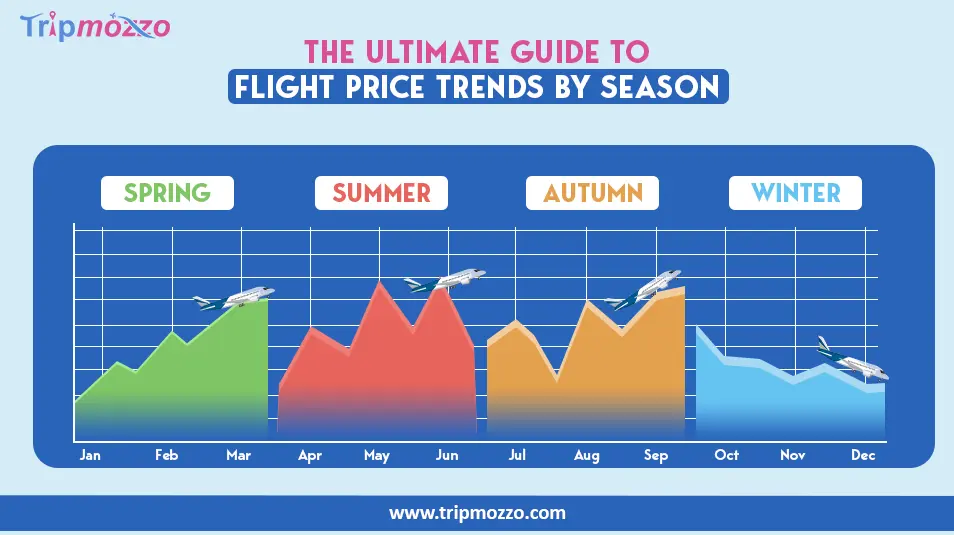
Table Of Content
We all know the feeling, the sickening anticipation of hitting refresh on a flight search engine page and seeing prices rise by $200 overnight, as if the airline could read our minds. But the reality is less magical and more cunning than you might think. Flights are not a game of chance, they are a code, a code spoken by airlines and too few customers.
Algorithms, school dates, corporate travel seasons, and even national holidays are all factors in the price of the same airline seat. The savvy traveler who grasps flight price trends by season does not expect to get lucky; they make their own luck. They book like pros, not like novices.
This is not another hack and tips guide. It's a data-driven, experience-driven guide to when prices go up, when they crash, and, most importantly, how making the right decision at the right time can transform a flight from ordinary to miraculous.
If you've ever woken up to a flight price that doubled overnight with no media stories to explain why, then you know that flights are as much about mood as they are economics. But that apparent arbitrariness is underpinned by a system that is as predictable as clockwork.
There are seasonal variations in flight prices because the airline industry is among the world's most sensitive to demand. When the kids are out of school, parents make plans. When companies put a hold on travel in January, business class cabins go unused. Oil prices fluctuate, and so do fare prices, invisible to the consumer.
The entire system operates through pricing algorithms which adjust ticket prices multiple times each day to match changing demand and competition while achieving maximum revenue through their automated processes. Travelers who understand these forces stop being victims of the system and start becoming students of it.
Airline prices show continuous fluctuations because they change according to passenger search patterns and seat availability. Two people flying on the same flight will pay different prices and that is the expected outcome of the system.
Dynamic pricing in the airline industry is the ability to set fares in real time, taking into account a constant stream of information, and the airline industry has perfected this system at a scale not seen in other sectors. It's largely an algorithmic process: proprietary computer systems track seat availability, competitor fares on routes and spikes in demand and adjust prices accordingly, often within the hour.
A route with several searches in the past hour but with only a few seats left will be subject to an automatic price increase. In contrast, a flight with low load factors three days from now may be suddenly discounted heavily to boost demand. For the consumer, this means that a price today may become different tomorrow. The customer needs to understand both demand and supply because this situation requires them to know future price changes.
The main factor in setting the airline prices is the equilibrium of demand and supply. When demand exceeds supply, there's little reason for airlines to reduce fares and every reason to increase them. With excess capacity, the pressure is to reduce prices and fill seats, to at least recover variable costs.
|
Demand Scenario |
Seat Availability |
Typical Fare Impact |
|
Peak holiday period |
Very low |
Fares surge 40-120% above baseline |
|
School holiday weeks |
Low to moderate |
Fares rise 20-60% |
|
Off-peak weekdays |
Moderate to high |
Fares near or below baseline |
|
Low season, mid-week |
High |
Discounts of 15-40% common |
|
Last-minute, high-demand route |
Near zero |
Fares spike sharply |
|
Last-minute, low-demand route |
High |
Distress fares, often steep drops |
Of all the traveler-controllable factors, timing may be the most important, and when dissected it yields four rules.
a) Early Bird Startegy
Early bookings lock in the lower fare classes before capacity constraints set in. When flying internationally during peak periods, early bookings offer cheaper tickets, more seat options and routing flexibility.
b) Domestic Sweet Spot
Domestic fares have a steeper curve. The sweet spot (3-8 weeks) reflects the trade-off between early access to seats and airlines prioritising filling seats over protecting margins.
c) The Last-Minute Myth
Airlines only offer last-minute deals for flights which they consider to be unprofitable. Airlines establish elevated fare prices for holiday travel routes because they expect customers to make last-minute purchases at higher pricing.
d) Developing a Strategy
Holiday flyers who schedule bookings around holidays, school breaks and airline promotions, in other words, create their own holiday flight price forecast, get better prices than those who book on impulse.
Airlines' monthly patterns are not all equal. Airfares climb, level out and dip in a cycle that plays out year in and year out, due to human psychology as much as airline tactics. Knowing these cycles is the difference between a full-fare or low-fare traveler.
Peak season takes airline pricing from negotiation to market. Travelers are packed into predictable time frames because seat availability is limited and airlines maintain high prices. The identification of peak times enables consumers to either avoid those periods or make their plans accordingly.
The simultaneous closure of schools and annual leave seasons create the year's peak demand period. Airlines counter by holding back the bookings of discounted ticket classes, knowing they will be sold at full price anyway. Flexibility during this window is expensive.
The Christmas travel window condenses a crush of demand into just three weeks - and there's little time for deals. Popular routes fill up weeks in advance, and peak season airfare 2026 on transatlantic and Asia-Pacific routes is already on track to exceed December departure averages of previous years.
School vacations and holiday weekends generate smaller peaks in demand. These periods are spotted months ahead by airlines through booking-curve analysis, and supply and prices are adjusted well before the start of the search.
Shoulder season is when the savvy traveler always gets a break. The population decreases when the rates stabilize because cities and towns reveal their true nature during this time. The present moment offers a unique combination of affordable prices and comfortable experiences which cannot be equaled by any other time of the year.
Travel returns to normal after winter, but before the summer rush. Load factors remain strong for airlines, but they have less market power to increase fares. Europe and Asia's most sought after destinations are available, less crowded, and often at their most beautiful in spring.
With holidays getting over, there is a slack in the demand for tourism, but weatherwise things are still at their best for traveling in many parts. Airlines are more focused on maintaining occupancy than profit, offering value. The shoulder season travel benefits don't stop with price, airports, hotels and attractions are less crowded.
With no peaks in demand, airlines can fill planes rather than needing to charge for scarcity. This ensures prices remain stable, enabling consumers to plan accordingly and often get more for their money with moderate lead times.
The off-season period stands as the least known aspect of the aviation industry calendar. Airlines focus on filling seats during this time because travel demand reaches its lowest point, and their marketing efforts become more aggressive. This season is the cheapest for the flexible traveler, if she knows how to interpret the market and respond accordingly.
Demand plummets almost immediately after New Year's, with airlines facing full capacity with a fraction of their usual demand. To preserve load factors, airlines offer promotional fares, reward points and sales. On some key domestic as well as short-haul international routes in a mid search travel period, you can expect off-season flight deals 2026.
Airline seats function as perishable goods which airlines use to establish their off-peak pricing. Airlines use their discount and upgrade programs together with their joint promotional efforts to create demand during these periods. The traveler can create their travel plans because they know about the promotions which follow specific patterns.
Airfares show regular price fluctuations throughout the entire calendar year. The prices change according to the demand patterns and upcoming holiday dates and existing weather conditions and the travel patterns of people. You can enhance your holiday trip planning process by knowing the monthly patterns because it enables you to identify peak pricing periods and find cost-effective travel options.
The starting period of the year experiences a decline in travel activities after the holiday season ends. During this time when fewer travelers prepare for trips, airlines change their fare structures which creates a cost-efficient travel option for passengers who can adjust their travel times.
|
Category |
Key Insight |
What It Means for Travelers |
|
Post-Holiday Low Demand |
Fewer people travel after holidays, so prices go down. |
You can book cheaper flights and enjoy less crowded airports. |
|
Budget Travel Deals |
Early months offer lower prices on flights and hotels. |
You can save money by planning trips during this time. |
|
Airline Discounts |
Airlines give offers to attract more travelers. |
You can grab deals by checking prices regularly and booking fast. |
Reality shows its first signs of summer through increasing travel activity which begins its upward trend at this time of year. The holiday planning process begins for families while overseas travel becomes more popular, which results in changing airfare patterns that affect both domestic and international flights.
|
Category |
What's Happening |
What Travelers Should Do |
|
Rising Summer Airfares |
Flight prices go up as more people plan summer trips. |
Book early to get lower prices before fares increase further. |
|
Increased Travel Bookings |
More families and tourists are starting to book flights. |
Plan ahead and secure tickets before flights fill up. |
|
Fewer Early-Bird Deals |
Airlines reduce cheap early booking offers. |
Don't wait too long, book soon to avoid higher prices. |
Most countries experience their highest vacation period during this time. The combination of increased demand and reduced supply together with higher international travel volume results in the most expensive ticket prices of the year.
|
Category |
What's Happening |
Traveler Tip |
|
Peak Travel Pricing |
Flight prices are highest due to very high travel demand. |
Book early or travel on less busy days to save money. |
|
Holiday Travel Surge |
More people travel during holidays, increasing crowd and cost. |
Plan in advance and avoid peak dates if possible. |
|
Limited Seats, Higher Fares |
Flights fill quickly, leaving fewer seats at higher prices. |
Reserve tickets early to secure better prices and availability. |
The last months of each year experience an increase in travel because of festivals and holidays and year-end vacation travel. The costs show high variability because they frequently hit their highest points during important holiday times.
|
Topic |
What's Happening |
What Travelers Should Do |
|
Festival Fare Surge |
Flight prices increase during festival seasons due to high travel demand. |
Book tickets early and avoid peak festival dates to save money. |
|
Holiday Price Inflation |
Prices rise sharply around Christmas and New Year holidays. |
Plan in advance and compare fares to find better deals. |
|
Costly Last-Minute Bookings |
Waiting too long leads to higher ticket prices and fewer options. |
Book as early as possible to get lower fares and better choices. |
By making a smart plan for your journey, you can save a lot of money on spending. Although, there are some helpful tricks to make your vacation extra special, it can make your trip relaxed and lasting. Scroll down the page and dive into the strategies for saying no to spending.
By knowing when fares are likely to go up and down and booking smartly, you can be the master of your travel finances. You become an empowered savvy shopper when you prepare and utilise these tips. Put these tips to work for your upcoming journey and find better prices. Start monitoring prices now and get the most for your money.
All Categories
Looking for detailed information on airline policies, terms & conditions, and more?
Call now to get complete guidance.
+1-888-933-0080Recent Articles